
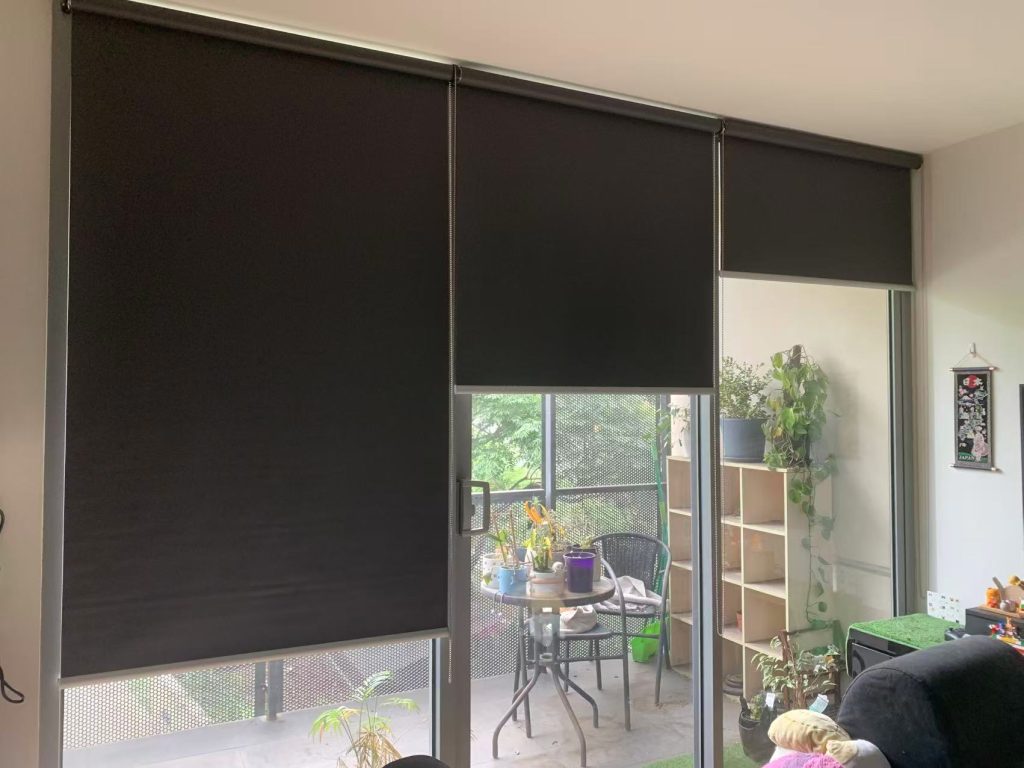
Getting the measurements right is the main reason one home ends up with neat, room-darkening blinds while another still sees light leaking around the edges. Blockout roller blinds do a strong job of stopping light through the material, but most light complaints come from side gaps, top gaps, or a blind that does not sit where it should. This guide explains how to measure blockout roller blinds for inside and outside mounts, with practical steps to reduce light gaps and avoid costly remakes.
Why do light gaps happen with roller blinds
A roller blind has to clear brackets, roll smoothly, and avoid rubbing on the wall or frame. That clearance creates small gaps. Light is strongest at the sides where the sun hits the window at an angle, and at the top, where the bracket area may leave a line of light.
Your measurement choice decides how much overlap you get. Inside mount looks clean and minimal, but the frame limits the width. Outside mount gives more coverage and is usually the better option when reducing light gaps is the priority.
Inside mount measurements for a cleaner look
Step 1: Measure the width in three places
Measure the inside width at the top, middle, and bottom of the window recess. Use the smallest measurement. Window frames are rarely perfectly square, and using the smallest number prevents the blind from binding.
As a general rule, you want the blind to fit comfortably inside the recess rather than squeeze in. If the fit is too tight, the blind may scrape the sides, drift, or not drop straight.
Step 2: Measure the drop in two places
Measure the inside height on the left and right. Use the larger measurement so the blind fully covers the opening. If there is a sill, decide whether you want the blind to stop at the sill or go slightly past it to reduce a bottom gap.
Step 3: Check depth and obstacles
Inside mount needs enough depth for the brackets and the roll. Also check for handles, locks, flyscreens, or protruding trims. If the blind is forced too far forward to clear a handle, you can lose side coverage and create bigger light gaps.
Step 4: Plan for side gaps with inside mount
Even with perfect measurements, an inside mount usually leaves some light at the edges because the fabric cannot press against the frame. If the room must be very dark, consider going outside the mount or pairing the blind with curtains. Another option is adding light block channels if your window setup allows it.
Outside mount measurements for better coverage
Step 1: Decide on your overlap
Outside mount works best when the blind extends beyond the window opening. More overlap means fewer light gaps. A practical target is to extend past the opening on both sides and above the top edge. This stops angled light and covers small frame irregularities.
If you have architraves or trim, measure to suit the flat mounting surface. The blind must sit on a stable area so the brackets do not twist.
Step 2: Measure width across the intended mounting area
Measure the total width you want the blind to cover, including your side overlaps. Check that the extra width will not hit adjacent walls, switches, or cupboard doors. Then confirm there is room for bracket placement at both ends.
Step 3: Measure the drop with the top overlap included
Measure from where the blind will be mounted down to where you want it to finish. Include extra height above the opening. This helps cover the top area where light commonly leaks through near brackets.
If the blind stops short, light can spill under the bottom edge, especially when the sun is low. Add a little extra drop if you want better coverage.
Step 4: Keep the blind level
Outside mount exposes any slope in the ceiling line or trim. Use a level line when marking bracket points. A blind mounted out of level can drift to one side and worsen gaps.
Quick checks before you place an order
Confirm the measuring points
Make sure you are measuring the exact surfaces where brackets will be fixed. Many mistakes happen when people measure the glass width but mount it on the trim, or measure the recess but mount it on the face.
Think about the purpose
For bedrooms, nurseries, or media rooms, outside mount is usually the smarter choice because it reduces light gaps. For kitchens or living areas where you want a tidy finish, an inside mount can work well if you accept a small amount of edge light.
Consider the window surroundings
If you have shallow recess depth, bulky handles, or uneven frames, outside mount often avoids problems. If you have deep recesses and clean square frames, an inside mount can look very built-in.
Final tip for reducing light gaps
If your goal is the darkest room possible, choose outside mount with generous overlap and careful levelling. If you prefer a flush look, choose inside mount, but plan for a small side light and focus on accurate measurements. Either way, measuring carefully is what turns blockout roller blinds into a true room darkening solution rather than a compromise.
And if you would like to get some professional advices about implementing blockout roller blinds, you are more than welcome to contact us for free measure and quote.